Folding home care beds
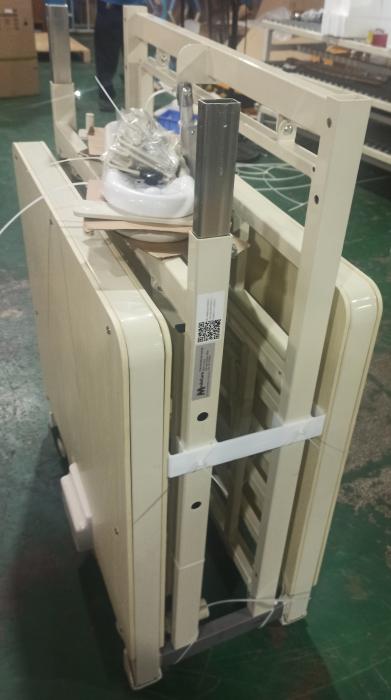
Folding home care beds are adjustable hospital-style beds for home use that fold compactly for storage or transport, offering features like height/head/foot adjustments, side rails, and wheels to improve patient comfort, safety, and caregiver ease for those with medical needs or during recovery. They are designed for temporary or long-term care, providing clinical support without permanent installation, making them versatile for recovery, chronic conditions, or space-saving solutions.
Key Features
Adjustability: Electric controls for head, foot, and height (Hi-Lo) positions, plus Trendelenburg/reverse Trendelenburg for optimal patient positioning and easier caregiver tasks.
Foldable Design: The entire bed frame folds into a smaller unit, allowing for easy storage in closets or transport in vehicles, ideal for short-term needs or smaller homes.
Safety Rails: Integrated, often removable, side rails to prevent falls and provide support, ensuring user safety.
Mobility: Usually equipped with locking caster wheels for easy movement within the home and secure placement.
Ease of Setup: Some models are designed for single-person, push-button setup and breakdown, simplifying installation.
Comfort: Often come with comfortable mattresses and features that mimic hospital beds to enhance patient comfort and quality of life.
Benefits
For Patients: Improved comfort, easier positioning, and greater independence.
For Caregivers: Reduced back strain from less bending, easier patient care, and easier storage when not in use.
For Home Settings: A practical, versatile solution that offers medical functionality without the bulk of a traditional hospital bed, fitting into home environments.
To use a folding home care bed, first clear it and flatten it with the hand control, then unlock/disengage any safety latches or springs before folding the frame, securing it with the clip lock, and moving it carefully using the directional castor, always prioritizing safety by keeping the area clear and locking brakes when stationary.
Setup & Operation (Unfolding)
Clear & Position: Remove bedding, plug in or ensure battery is in place, and unlock all castors (wheels).
Unfold Frame: Release the clip lock bar, hold handles firmly, and gently unfold one side at a time, securing with bolts as indicated.
Attach Parts: Attach casters (if needed), handles, and plastic caps, ensuring everything is tight.
Secure Mattress: Place mattress and secure it with the retainers to prevent sliding.
Lock Castors: Engage the brakes on all castors when in the desired location.
Using the Hand Control (Pendant)
Head/Foot: Press the up/down buttons to adjust the backrest and knee sections for comfort.
Height: Use separate buttons or a crank (on some models) to raise or lower the entire bed's height.
Power Failure: A 9V battery can often lower the bed to flat during outages (check manual).
Folding & Transporting (Reverse Process)
Prepare: Remove bedding and ensure the bed is in its flattest, lowest position.
Disengage: Release any leg retention bars or springs, and remove the mattress.
Fold: Secure the clip lock, then fold the frame up, holding handles, and lower carefully.
Lock: Lock all brakes and secure the handset and cables so they don't drag.
Move: Use the directional castor to steer the bed, pushing from the side.
Safety Tips
Keep cords and obstructions away from the bed.
Ensure the patient isn't trapped by moving parts.
Always lock brakes when the bed is not in motion.
Read your specific model's manual for detailed instructions.
 Send Email
 WhatsApp